
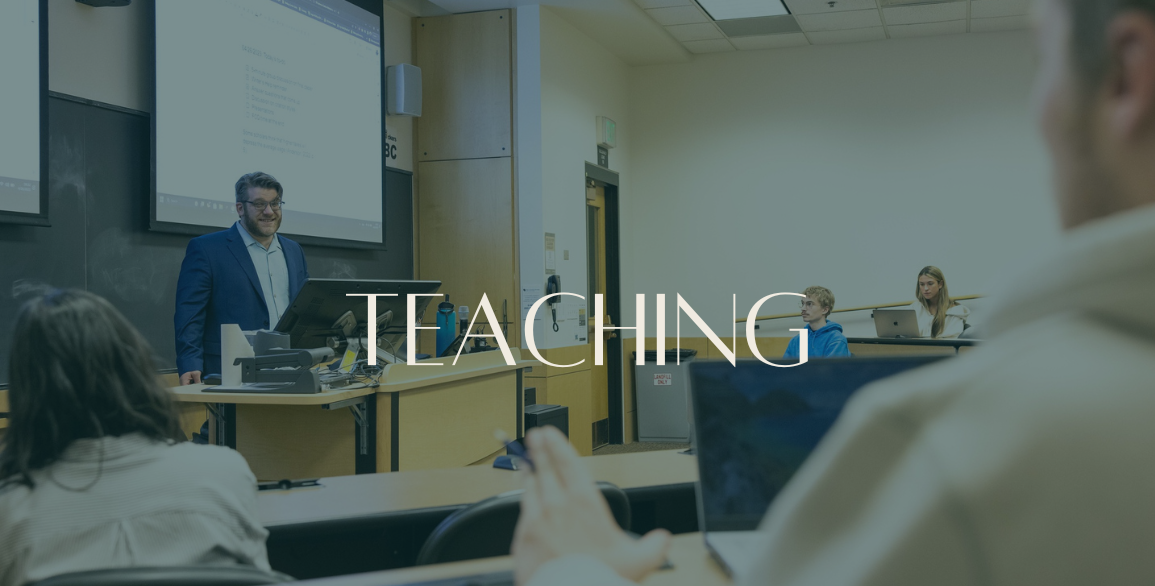
I always knew I wanted to teach. When I was in HS, I had the opportunity to work in a math classroom and support the teacher and I loved it. Additionally, the people who had the biggest impact on me were my teachers. They pushed me really hard to succeed and, ultimately, they helped me get into the University of Michigan. These experiences were really formative and inspired me to get into education.
I had a long college and grad school journey that involved switching majors, switching degrees, switching programs, moving across the country and so on; I even taught at a local prestigious college-prep HS in Denver for a year (don’t ask how I did this while still teaching at CU haha). Ultimately though, this journey led to me this unique teaching-course designer role at CU Boulder. At the same time I was teaching classes in a variety of modalities, with various schedules, and on a variety of topics, and this got me interested in course design; anyone who cares about their teaching inevitably wants to know how to do it better, right?
If you’re interested in discussing my teaching or requesting course materials, reach out!
- Every student is unique and needs a unique approach. Someone who struggles understanding some material isn’t “incapable” or “stupid”… they’re simply struggling to understand it as presented. As someone who has ADHD, I have experimented with many different methods of learning. Every learner is different and just needs an educator who is willing to try alternative approaches. I love being that educator.
- Learning should be democratic. It should be a constant negotiation between teacher and learner about what things to approach and how to approach them. Obviously this has limits (if I’m teaching you Latin, we can’t negotiate into learning biology), but if students feel involved in the curriculum, they will always care more and try harder. The “sage on the stage” model of learning is condescending and, simply put, students should never feel condescended to. We’re all equals in learning.
- It’s extremely important for things to be transparent to students (and parents). Expectations should be clear as should the reasons for these expectations. This ties into the previous point: it’s the student’s classroom as much as it’s mine. When teaching, I will always do my best to explain why I’m requiring certain things because I think the students deserve that. Furthermore, this helps to build trust, which is a valuable resource in the student/teacher relationship.
- Bring passion and joy to the lesson. I try to only ever teach or tutor things that I absolutely love or find interesting so that every lesson is naturally motivated and easy to get swept up in. I will also try to find ways to inspire these feelings in every student because, honestly, that’s when learning happens the best: when it’s passion driven and not necessity driven.
- University Courses Taught
- HS Latin (All Levels)
- 10th Grade English – British Lit
- 9th Grade English – American Lit
- 11th Grade English – Advanced Compositon
- ENGL 3016 – Writing in the Age of AI
- WRTG 1150 – First Year Writing and Rhetoric
- WRTG 1250 – Honors First Year Writing and Rhetoric
- WRTG 3020 – Heroism: From Troy to Baghdad
- WRTG 3020 – Comics and the Graphic Novel
- WRTG 3030 – Writing for Science and Society
- WRTG 3045 – Writing for the Emerging Workplace
- CLAS 1020 – Argument from Evidence: Writing about the Ancient World
I began working part-time in instructional design in 2017, as a faculty consultant of sorts. Over time my role has evolved to focus on leading workshops and mentoring small groups on practical topics such as AI and assessment design. I became one of the few course designers at CU who also still teaches. This gives an informed approach both to my course design philosophy but also to my teaching philosophy. Then the COVID-19 Pandemic hit and I was one of the people helping faculty migrate their courses online in a hurry! I have given a number of talks on pedagogy and course design, and I’m currently focused on the impact of AI-generated content in an academic setting. As much as I love teaching, helping teachers teach seems like a way to help more students in the long-term, which is what has drawn me to this.
It’s always important to me that these workshops come off as peer-led. I’m a teacher trying to use my own experiences to help other teachers solve problems, that’s it.